
Summary:
Most people don’t think much about dumpster delivery until they’re mid-project and realize they either ordered too small, the truck can’t get to the placement spot, or the bill looks nothing like the original quote. It’s one of those things that seems straightforward until it isn’t.
If you’re in Nassau County, there’s an extra layer to it — tight driveways, tree-lined streets, village permit rules that vary block by block. This guide covers the decisions that matter before the truck shows up: what size actually fits your project, what your property needs to accommodate delivery, and how to figure out whether a rental or a full-service pickup is the smarter call for what you’re dealing with.
How to Choose the Right Dumpster Size for Your Project
The single biggest mistake people make when renting a dumpster is guessing on size. Go too small and you’re either overfilling it — which creates problems at pickup — or you’re paying for a second container. Go too large and you’ve spent more than you needed to, and you may have a container that physically doesn’t fit your property.
Size selection comes down to two things: the volume of what you’re getting rid of, and the weight of the materials involved. Those aren’t always the same. A garage full of old furniture takes up a lot of space but isn’t that heavy. A partial bathroom demo with tile and concrete is the opposite — compact but dense. Both factors affect what you’ll actually pay.
Small Roll Off Dumpster Options for Nassau County Residential Projects
A 10-yard roll off dumpster is the workhorse of residential cleanouts on Long Island, and for good reason. It holds roughly four pickup truck loads of debris, it fits on most Nassau County driveways, and it costs less than the larger containers. For a single-room renovation, a garage cleanout, or clearing out years of accumulated basement storage, a 10-yard is usually all you need.
The footprint matters here more than people realize. A 10-yard container takes up approximately 14 feet in length and 8 feet in width. That’s workable on most residential driveways — but you also need about 23 feet of vertical clearance for the delivery truck to drop it. If you’ve got a mature tree hanging over your driveway in Merrick or a low utility line running across the front of your property in Floral Park, that clearance requirement becomes a real conversation before scheduling.
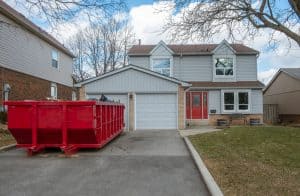
For projects in the 200 to 400 square foot range — a kitchen gut, a bathroom remodel, a single-car garage — the 10-yard is almost always the right call. It’s also the container that fits when nothing bigger will. Nassau County’s housing stock, much of it built in the 1940s and 50s, wasn’t designed with roll-off trucks in mind. Driveways in Levittown, Valley Stream, and Oceanside tend to run narrow and short. Choosing a small roll off dumpster isn’t settling — it’s often the only practical option, and it’s the one that protects your driveway from unnecessary stress.
If your project is larger — a multi-room renovation, a full estate cleanout, or a roofing job — a 15 or 20-yard container is worth the step up. A 20-yard holds roughly eight pickup truck loads and handles most mid-size renovation projects comfortably. Just know that a 20-yard container requires about 22 feet of ground length and 25 feet of overhead clearance. In older neighborhoods with established tree canopies, that’s not always available without some planning.
Matching Container Size to Common Nassau County Project Types
Project type is the most reliable guide to size selection when you’re not sure where to start. A single-room renovation — say, pulling up flooring and replacing a bathroom in a split-level in Wantagh — typically fits in a 10-yard container with room to spare. A full kitchen gut in a post-war Colonial in Garden City, including cabinets, appliances, flooring, and drywall, usually runs closer to a 15-yard. A whole-house cleanout before a sale — the kind that clears out decades of accumulated belongings from a home in Great Neck or Manhasset — often calls for a 20-yard, sometimes more.
Estate cleanouts deserve their own mention because they’re one of the most common jobs we handle in Nassau County, and they’re also the ones where people most often underestimate what’s involved. A house that’s been lived in for 40 or 50 years holds a surprising amount of material. The combination of furniture, clothing, appliances, and general household goods adds up fast. In many cases, a 20-yard dumpster handles the bulk of it — but heavier items like old appliances, mattresses, or construction debris from a previous renovation can push the weight limit before the container looks full.
That’s why weight matters as much as volume. Most containers come with a weight allowance — typically one to two tons for smaller containers, up to four tons for larger ones. Going over that limit triggers overage charges, often $50 to $100 per ton above the threshold. Materials like concrete, brick, roofing shingles, and ceramic tile are deceptively heavy. A small pile of old tile from a bathroom floor can weigh several hundred pounds. If your project involves any of those materials, it’s worth factoring that into your size decision upfront rather than dealing with the bill afterward.
When in doubt, a quick call before booking can save you from both outcomes — the undersized container and the oversized one. Describing what you’re clearing out, roughly how much of it there is, and what the heavier materials are gives enough information to land on the right choice the first time.
What Dumpster Delivery Actually Requires on Long Island Properties
Getting the size right is half the equation. The other half is making sure the delivery itself goes smoothly — and on Nassau County properties, that’s not always a given.
Roll off dumpster delivery involves a truck that’s larger than most people picture. It needs room to pull in, position the container, and pull back out. On a standard suburban lot with a clear driveway and no overhead obstructions, that’s usually straightforward. On a typical Long Island property — with a single-lane driveway, a tree or two, and a neighbor’s fence running close to the edge — it takes a bit more planning.
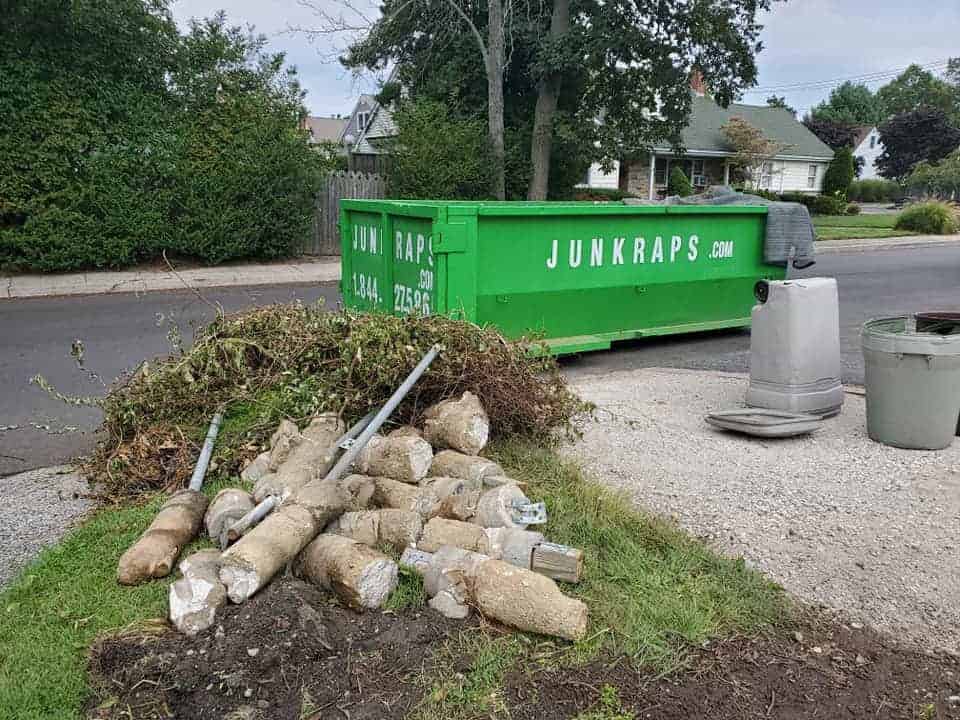
Roll Off Dumpster Delivery: Access Requirements and What to Check Before You Schedule
Before a roll off dumpster delivery is scheduled, it helps to do a quick walkthrough of your property with a few specific things in mind. First, measure or estimate your driveway width. Most residential driveways in Nassau County run between nine and twelve feet wide. A delivery truck needs enough room to maneuver without going onto a lawn or neighboring property. If your driveway is on the narrower end, a smaller container is usually easier to place — and easier to pick up.
Second, look up. Overhead clearance is one of the most overlooked factors in dumpster delivery, and it catches people off guard. The delivery mechanism on a roll off truck extends vertically when dropping the container, requiring roughly 23 to 25 feet of clearance depending on the container size. Low-hanging branches, utility lines, and even basketball hoops have caused delivery complications. In established neighborhoods like Rockville Centre, Lynbrook, or Port Washington, where trees have had 50 or 60 years to grow, this is a real consideration.
Third, think about driveway surface. Concrete and asphalt driveways can handle the weight of a loaded container, but older or cracked surfaces are more vulnerable. We place boards or planks under the container’s wheels to distribute the weight and reduce the chance of damage. If your driveway is older or already showing wear, it’s worth asking about this before delivery.
Finally, consider where the container needs to sit. If your driveway doesn’t have room or the access is too tight, street placement is an option — but it almost always requires a permit from your local municipality. Nassau County’s patchwork of over 60 incorporated villages means permit requirements vary significantly from one town to the next. What applies in Mineola may be different from what’s required in Hempstead or Oyster Bay. Placing a container on private property, like a driveway or a pad on the side of the house, typically doesn’t require a permit at all.
Dumpster Rental vs. Full-Service Junk Removal: Which One Actually Makes Sense for Your Project
This is the question most people don’t think to ask until they’re already committed to one option. Dumpster rental and full-service junk removal solve the same problem — getting rid of a large amount of material — but they work very differently, and one tends to be a better fit depending on what you’re dealing with.
Renting a dumpster makes the most sense when you have an ongoing project, when you want to work on your own schedule, or when the volume of material is high enough that a crew would be making multiple trips anyway. Renovation projects are a good example. If you’re pulling out a kitchen over a weekend, having a container on-site means you can toss debris as you go without coordinating around a crew’s schedule. The same applies to a garage cleanout you’re doing yourself over a few weekends — you load it at your pace, and we pick it up when you’re done.
Full-service junk removal is the better call when the work is already done and you just need it gone, when the items are heavy or awkward to move without help, or when you’d rather not deal with the physical labor at all. Estate cleanouts are a common example. Clearing out a parent’s home in Seaford or Baldwin is emotionally and physically exhausting enough without also having to haul furniture and appliances to a container in the driveway. A crew that comes in, handles the heavy lifting, and clears the property in a few hours is often worth every dollar.
The honest answer is that some projects benefit from both. A large home renovation might call for a dumpster on-site for construction debris while a junk removal crew handles the old appliances, furniture, and oversized items that don’t break down easily. We offer both services, which means you’re not locked into one approach — and if your project changes mid-way, you’re not starting over with a different company.
Cost is worth mentioning here too. A lot of people assume DIY is always cheaper, but when you factor in truck rental, dump fees, fuel, and the time it takes to make multiple runs to a transfer station, the math often shifts. Getting a quote for both options before deciding is the easiest way to know which one actually makes sense for your specific situation.
Getting Dumpster Delivery Right in Nassau County Starts With One Call
The difference between a smooth project and a frustrating one usually comes down to the decisions made before the container shows up — the right size, a realistic look at your access, and a clear understanding of what’s actually included in the price. None of it is complicated, but it does require someone who’s done this on Nassau County properties before and knows what to look for.
We’ve handled deliveries across Nassau County — from tight driveways in Levittown to estate cleanouts in Great Neck — and the questions are almost always the same. What size do I need? Will it fit? What’s the actual cost? Those are exactly the questions worth answering before you book, not after.
If you’re ready to move forward or just want to talk through what your project actually needs, we’re a straightforward call or message away. Same-day delivery is available, there are no hidden fees, and you’ll get a straight answer on what makes sense for your job.