
Summary:
You’ve got a project on your hands and you know regular trash pickup isn’t going to cut it. So you start looking at dumpster rentals — and then you hit the first wall: what size do you actually need? Order too small and you’re paying for a second rental or eating overage fees. Order too large and you’ve spent more than you had to. The 20 yard dumpster sits right in the middle of that range, and for most Nassau County homeowners, it’s the size that ends up being exactly right. Here’s how to know if it’s right for you.
20 Yard Roll Off Dumpster: What It Holds and What It's Built For
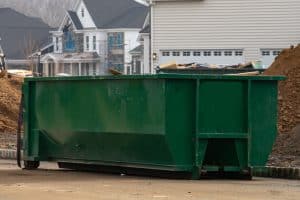
A 20 yard dumpster holds 20 cubic yards of debris — roughly the equivalent of six to eight full pickup truck loads, or somewhere around 110 to 130 large trash bags. The container itself runs approximately 22 feet long, 7 to 8 feet wide, and about 4.5 feet tall. That last measurement matters more than most people realize, because a lower wall height means you can actually load it without a ladder or a step stool.
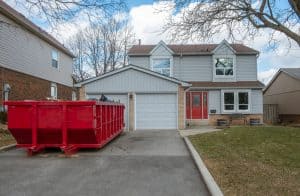
It’s the most commonly rented dumpster size in the country, and that’s not a coincidence. It hits the sweet spot for medium-to-large residential projects — big enough to handle serious debris, compact enough to fit in most standard driveways without blocking the street or triggering a permit requirement in Nassau County.
Which Nassau County Projects Actually Fill a 20 Yard Dumpster?
Nassau County’s housing stock skews older — a lot of Cape Cods, colonials, and split-levels built between the 1940s and 1970s. That matters because older homes generate more renovation waste per square foot than newer construction. Decades-old tile, original cabinetry, outdated plumbing fixtures, and layers of flooring add up fast. When you’re gutting a kitchen in Wantagh or doing a full bathroom remodel in Merrick, you’re not just pulling out a few cabinets — you’re dealing with cast iron, thick tile, and materials that weigh significantly more than they look.
A full kitchen gut-out — cabinets, flooring, countertops, drywall — typically fills a 15 to 20 yard container. Two bathrooms will often push you toward the 20 yard range as well, especially if you’re pulling tile floors and tub surrounds. A single-layer roofing tear-off on a home up to about 2,500 to 3,000 square feet is another common fit. The shingles are heavy, but the 20 yard container’s weight limit — usually around 3 tons — handles it cleanly for most standard residential roofs.
Whole-home cleanouts are another strong use case. If you’re clearing out a house in Levittown or Hicksville after an estate sale, or prepping a property for sale in Freeport, a 20 yard dumpster gives you enough room for furniture, appliances, boxes, and miscellaneous junk without having to make multiple calls. Large garage or attic cleanouts — the kind where you haven’t touched anything in 20 years — land in this range too.
Where people go wrong is assuming that a bigger container means they can load more heavy material. It doesn’t work that way. Weight limits are fixed regardless of how full the container looks. Concrete, bricks, and roofing shingles can hit a 3-ton limit when the dumpster is only a third full by volume. If your project is heavy-material-heavy, that’s a conversation worth having before delivery — not after.
5 Yard Dumpster Rental and 10 Yard Roll Off Dumpster Rental: When Smaller Actually Makes More Sense
Not every project needs a 20 yard container, and ordering more than you need isn’t a win — it’s just a bigger invoice. A 5 yard dumpster rental makes sense for genuinely small jobs: a single-room declutter, a minor landscaping cleanup, or a small deck teardown where you’re not dealing with a lot of material. It holds roughly one to two pickup truck loads, and it’s the right call when space is tight and the scope is limited. If you’re working with a narrow driveway in Garden City or a small side yard in Valley Stream, the 5 yard keeps things manageable.
The 10 yard roll off dumpster rental covers a wider range of projects and is often the right choice for jobs that feel bigger than they are. It holds about 10 cubic yards — three to four pickup truck loads — and works well for single-room renovations, garage cleanouts, small roofing jobs, fence removals, and moderate yard waste. In Nassau County, a 10 yard rental typically runs in the $500 to $550 range for 2 tons of material. It’s a solid middle option when a 20 yard feels like overkill but a 5 yard clearly isn’t enough.
The honest answer is that most people underestimate how much debris a project generates. A bathroom remodel that looks like a 10 yard job often turns into a 15 yard job once the tile is out and the drywall comes down. When in doubt, sizing up is almost always the smarter financial move. A second rental or overage fees cost more than the difference between container sizes. If you’re unsure, we’ll give you a straight answer based on your specific project — not a guess designed to upsell you.
30 Yard Roll Off Dumpster: When Nassau County Projects Outgrow the 20
There’s a meaningful jump between a 20 yard and a 30 yard dumpster — not just in price, but in physical size. A 30 yard container runs about the same length as a 20 yard but stands around 6 feet tall, compared to 4.5 feet. That extra height changes how you load it. You’re tossing debris up and over a wall that’s roughly chest height, which is manageable with light material but exhausting with anything heavy. It holds 30 cubic yards — about nine to ten pickup truck loads — and weight limits typically run between 3 and 5 tons.
For most Nassau County residential projects, the 20 yard is the better fit. But when the scope expands, the 30 yard earns its place.

What Kind of Job Actually Needs a 30 Yard Dumpster on Long Island?
Multi-room gut rehabs are the most common reason Nassau County homeowners step up to a 30 yard container. If you’re renovating three or more rooms simultaneously — tearing out floors, removing walls, replacing windows — the debris adds up faster than most people expect. A full home renovation on a 1,800 square foot colonial in Syosset or a major remodel on a split-level in Plainview can easily push past what a 20 yard handles comfortably.
Major demolition projects are another clear use case. If you’re tearing down a garage, removing a large deck, or doing a full basement gut-out that involves concrete and structural material, the 30 yard gives you the volume and weight capacity to handle it without overflow. Real estate investors doing full property renovations — the kind that involve every room, new flooring throughout, full kitchen and bath remodels — typically need a 30 yard, sometimes two.
Storm debris is worth mentioning here too. Nassau County’s coastline makes it vulnerable to nor’easters and the occasional tropical storm. After a significant storm event, homeowners in communities like Long Beach, Oceanside, and Freeport have dealt with fallen trees, damaged siding, and flood-ruined basement contents all at once. That kind of cleanup — especially when it involves waterlogged furniture and structural debris — can fill a 30 yard container quickly. If you’re dealing with storm damage and need a dumpster the same day, we handle that.
One thing to check before ordering a 30 yard: make sure your driveway or placement area can actually accommodate it. The added height makes it harder to tuck under trees or near low-hanging structures, and the weight of the loaded container is significantly more than a 20 yard. A quick conversation before delivery prevents complications on the day of drop-off.
Dumpster Rental vs. Full-Service Junk Removal: Which One Actually Fits Your Situation?
This is a question we get often, and it’s a fair one. Renting a dumpster makes sense when you’re doing the work yourself, when the project unfolds over several days or weeks, or when you want control over the timeline. You fill it at your own pace, call when you’re done, and we pick it up. There’s no crew in your space, no scheduling around someone else’s availability — just a container in your driveway when you need it.
Full-service junk removal is a different animal. Our crew shows up, does the lifting, loads everything, and hauls it away. You point at what needs to go and we handle the rest. It’s the right call when you can’t or don’t want to do the physical work, when the project is a one-day push rather than a multi-day renovation, or when you’re dealing with heavy, awkward items — old appliances, furniture, exercise equipment — that aren’t easy to manage on your own.
The honest comparison comes down to time and labor. If you’re doing a kitchen demo over a long weekend in East Meadow and you’ll be generating debris in stages, a dumpster rental gives you the flexibility to work without a clock running. If you’re clearing out an elderly parent’s home in Rockville Centre and the goal is to get it done in a single day without breaking your back, full-service removal is almost always the better choice.
We offer both, which means we’re not going to push you toward one or the other for the wrong reasons. If you describe your project, we’ll tell you honestly which option makes more financial and practical sense. No hidden fees on either end, and no pressure to upgrade if what you actually need is straightforward.
Getting the Right Dumpster Size for Your Nassau County Project
The 20 yard dumpster is the right call for most medium-to-large projects in Nassau County — kitchen and bathroom remodels, roofing tear-offs, estate cleanouts, large garage purges. It fits in most standard driveways, loads easily, and handles the kind of debris that older Long Island homes generate without hitting weight limits prematurely, as long as you’re not filling it exclusively with concrete or tile.
When the project is smaller, a 10 yard or 5 yard gets the job done without overpaying. When it’s a full gut rehab or multi-room renovation, the 30 yard is worth the step up. And if you’re not sure whether to rent a container or hire a crew, that’s a conversation worth having before you commit to either.
We serve Nassau County and the surrounding Long Island area with same-day availability, all-inclusive pricing, and no time limits on rentals. Reach out and tell us what you’re working with — we’ll point you in the right direction.