
Summary:
Choosing the Right Placement Location for Your Dumpster
Location matters more than you might think. Your dumpster needs to be accessible for both delivery and pickup, but it also needs to work with your project flow and respect your property.
Start by walking your property with the delivery logistics in mind. Our truck needs clear access—no low-hanging branches, tight turns, or obstacles that could complicate placement. Most residential dumpster rental situations work best when the container is close to your work area but not blocking essential access points like garage doors or main walkways.
Protecting Your Driveway and Landscaping During Delivery
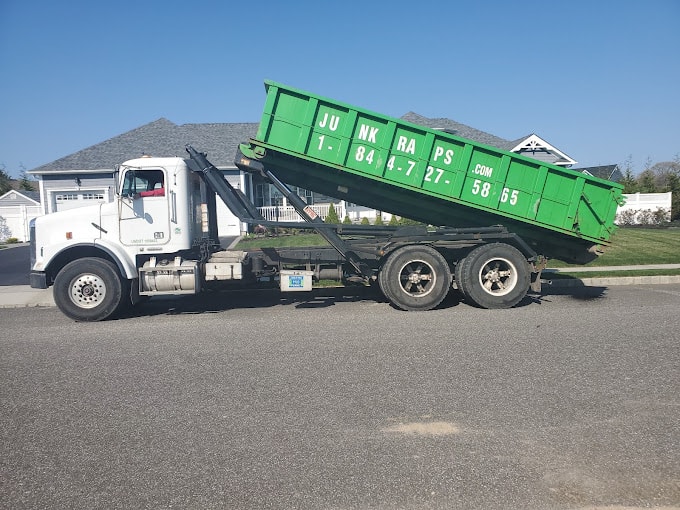
Our delivery trucks are heavy, and even empty dumpsters have significant weight. Your beautiful Huntington driveway doesn’t have to suffer for your project, but protection requires some planning.
Plywood sheets are your best friend here. A few pieces of ¾-inch plywood under the dumpster’s contact points distribute weight and prevent cracking or indentations. This is especially important if you have a decorative concrete driveway or pavers—common features in Huntington homes that can be expensive to repair.
Don’t forget about our truck’s path to your dumpster location. Our delivery truck might need to drive across parts of your lawn or navigate close to landscaping. Mark sprinkler heads with flags if they’re not obvious. Move potted plants, outdoor furniture, or decorations that could get damaged during maneuvering.
If your driveway slopes significantly, let us know ahead of time. Some slopes are too steep for safe dumpster placement, and it’s better to figure out alternative locations before our truck arrives. We can usually suggest solutions that work with your property’s layout.
Weather conditions matter too. If it’s been raining, soft ground becomes a bigger concern for both truck access and dumpster stability. A little preparation here prevents bigger problems later.
Understanding Huntington Permit Requirements and HOA Rules
Huntington has specific rules about dumpster placement, and your HOA might have additional restrictions. Getting this sorted before delivery day keeps you out of trouble with both local authorities and your neighbors.
If your dumpster needs to go on the street or public right-of-way, you’ll likely need a permit from the Town of Huntington. This isn’t automatic—there’s usually a fee and specific requirements about placement, duration, and safety measures like reflectors or barriers. The permit process can take a few days, so don’t wait until the last minute.
Many Huntington neighborhoods have HOA agreements that restrict or regulate temporary structures like dumpsters. Some require advance notification to neighbors, others have specific time limits, and some prohibit street placement entirely. Check your HOA documents or contact your management company before finalizing your dumpster rental plans.
Even if permits aren’t required, being considerate goes a long way. Let immediate neighbors know when your dumpster is arriving and approximately how long it’ll be there. Most people are understanding about renovation projects, especially if you give them a heads up rather than surprising them with a large waste bin rental appearing overnight.
We’re familiar with local Huntington regulations, but the responsibility for permits typically falls on you as the property owner. Ask about this when you’re booking your rental—we can guide you through the process or at least point you toward the right resources.
Preparing Your Property and Project for Efficient Loading
A well-prepared loading strategy makes your dumpster rental more efficient and potentially saves you money. Think beyond just having a place to throw debris—plan for how you’ll actually use the space.
Consider your project timeline and waste generation. If you’re doing a kitchen renovation, you’ll have different debris at different stages. Planning your dumpster placement and loading approach around your project phases helps you make the most of your rental period.
Organizing Your Debris for Maximum Dumpster Efficiency
How you load your dumpster affects how much you can fit and how easy pickup will be. Random throwing might feel satisfying, but strategic loading gets you more value from your waste rental bins.
Start with flat, heavy items on the bottom. Old flooring, drywall sheets, and similar materials create a stable base and use space efficiently. Break down larger items when possible—that old vanity takes up a lot less room when it’s disassembled rather than thrown in whole.
Keep weight distribution in mind, especially with commercial dumpster rental situations or larger residential projects. Concentrate heavy materials like concrete, tile, or appliances in one area rather than spreading them around. This makes pickup safer and more efficient for our truck operator.
Save space by filling hollow items. That old toilet or sink can hold smaller debris. Boxes and containers can be packed with loose materials before going into the dumpster. You’re paying for the space, so use all of it intelligently.
Don’t forget about prohibited items. Most dumpster rentals have restrictions on hazardous materials, electronics, tires, and certain appliances. Know what you can’t put in before you start loading, and have alternative disposal plans for restricted items. Paint cans, old TVs, and refrigerators usually need special handling that your regular dumpster rental won’t cover.
Safety Considerations and Access Planning
Your dumpster rental should make your project easier, not create new safety hazards. A little planning keeps everyone safe and prevents accidents that could complicate your renovation or cleanup project.
Think about who will be accessing the dumpster and how often. If you have contractors working on your project, make sure the dumpster location doesn’t interfere with their equipment access or create bottlenecks in their workflow. A dumpster that’s too far from the work area leads to shortcuts and potentially unsafe debris handling.
Consider lighting if your project extends into evening hours. A poorly lit dumpster becomes a safety hazard and makes loading more difficult. Temporary lighting or strategic placement near existing outdoor lights helps prevent accidents and makes the dumpster more functional for your project timeline.
Keep the area around your dumpster clear of tools, materials, and other project debris. It’s easy for the space around the dumpster to become a secondary storage area, but this creates trip hazards and makes loading more difficult. Establish a clear path from your work area to the dumpster and keep it maintained throughout your rental period.
If you have children or pets, consider how the dumpster affects their usual outdoor activities. A temporary fence or barrier might be necessary, especially for longer rental periods. Most same day dumpster rental situations are short enough that this isn’t a major concern, but longer projects require more planning around family routines and safety.
Making Your Huntington Dumpster Rental Experience Smooth
Preparing for dumpster delivery doesn’t have to be complicated, but doing it right makes everything else easier. Focus on the basics: choose a good location, protect your property, understand local requirements, and plan for efficient loading.
The few hours you spend preparing will save you days of potential headaches. Your project will run smoother, your property will stay protected, and you’ll get the most value from your rental investment. When you’re ready for reliable dumpster rental in Huntington, NY, we at Junk Raps can help make the process straightforward and stress-free.