
Summary:
How Dumpster Rental Works on Long Island
The process itself is simple. You choose a size, schedule delivery, fill it up during your rental period, and arrange pickup when you’re done. Most rental periods run seven to ten days, which gives you enough time to work without feeling rushed.
What makes Long Island different is the local landscape. You’re dealing with two counties, dozens of townships, and varying regulations depending on where your project sits. Nassau County has different rules than Suffolk County. Brookhaven handles permits differently than Babylon or Huntington.
That’s why working with a company that knows the area matters. Understanding which permits you need, how to handle placement on narrow driveways, and what to expect when you’re working in older neighborhoods with specific restrictions makes all the difference. It’s not just about dropping off a bin—it’s about making sure your project stays on track without surprises.
What Dumpster Sizes Are Available and How to Choose
Dumpster sizes are measured in cubic yards, and most companies on Long Island offer four main options: 10-yard, 20-yard, 30-yard, and 40-yard containers. Think of a cubic yard as roughly the size of a washing machine. A 10-yarder holds about three to four pickup truck loads of debris.
The 10-yard dumpster works well for small bathroom renovations, garage cleanouts, or minor landscaping projects. It fits in tight driveways and won’t overwhelm your property. If you’re clearing out an attic or replacing a few rooms of flooring, this size usually does the job.
A 20-yard dumpster is the most popular choice for homeowners. It handles medium-sized renovations like kitchen remodels, larger cleanouts, or roofing projects. You’re looking at roughly four to five truck loads of capacity, and it still fits in most residential driveways without needing street placement.
The 30-yard container steps up for bigger jobs. Whole-home cleanouts, major renovations involving multiple rooms, or significant construction debris all fall into this category. Contractors often choose this size because it balances capacity with manageability. You can fit five to seven truck loads worth of material.
Then there’s the 40-yard dumpster, the largest option most companies offer. This one’s for substantial construction projects, commercial demolitions, or large-scale estate cleanouts. It holds about eight pickup truck loads and requires more space for placement and pickup.
Here’s what most people get wrong: they underestimate how much debris their project will generate. Drywall, old cabinets, flooring—it all takes up more room than you’d think. And if you’re dealing with heavy materials like concrete, tile, or shingles, you’ll hit weight limits before you fill the container.
That’s why it’s better to size up if you’re between two options. Renting a slightly larger dumpster costs less than paying overage fees or scheduling a second rental. And weight matters as much as volume. A 20-yard dumpster might hold twenty cubic yards of space, but if you’re tossing concrete, you’ll max out the weight limit long before you fill it to the top.
Talk through your project with your rental company. Describe what you’re removing, how much of it there is, and what materials you’re dealing with. A good company will help you choose the right size based on real experience, not just square footage calculations.
Typical Dumpster Rental Pricing on Long Island
Let’s talk about what dumpster rental actually costs on Long Island, because this is where things get murky fast. Most rentals run between $300 and $800 for a standard seven-day period. That range depends on the size you choose, where you’re located, and what you’re tossing.
A 10-yard dumpster typically starts around $250 to $350. Move up to a 20-yard or 30-yard container, and you’re looking at $400 to $600. The largest option, a 40-yard dumpster, usually runs $700 to $1,000. Those are baseline numbers for Nassau and Suffolk Counties, though western areas closer to Queens tend to cost slightly less than eastern Suffolk locations.
But here’s the catch: the quoted price rarely tells the whole story. Many companies load on extra charges that can double your final bill if you’re not careful. Delivery fees, pickup fees, fuel surcharges, environmental fees, disposal fees—the list goes on. Some companies bundle them in, some charge separately, and some don’t mention them until the invoice arrives.
Weight limits create another layer of cost. Every dumpster comes with a tonnage allowance, usually between one and five tons depending on size. Go over that limit, and you’ll pay overage fees of $75 to $150 per ton. The frustrating part is that many companies don’t clearly explain weight limits upfront. You might think you’re fine because the dumpster isn’t full, but if you loaded it with heavy debris, you’ve exceeded the weight allowance.
Construction materials are the usual culprit. Concrete, tile, drywall, and roofing shingles all weigh significantly more than household junk or yard waste. That 20-yard dumpster might max out on weight before it’s even half full if you’re demolishing a bathroom or tearing up a driveway.
Rental period matters too. Most companies include seven to ten days in the base price, but if your project runs long, you’ll pay daily extension fees. These typically run $10 to $25 per day, which adds up quickly if you’re waiting on permits or dealing with weather delays.
Location within Long Island also affects pricing. Nassau County and western Suffolk typically cost less due to shorter haul distances to disposal facilities. Head out to the North Fork or eastern Suffolk, and rates climb because of the extra travel time and fuel costs involved.
Then there are permit fees, which we’ll cover in detail shortly. If your dumpster needs to sit on the street or any public property, you’ll need a permit from your local township. Some companies handle this for you and include the cost. Others pass the fee directly to you or expect you to obtain the permit yourself.
The key to avoiding sticker shock is getting everything in writing upfront. Ask for a complete breakdown that includes delivery, pickup, disposal, weight allowance, rental period, and any additional fees. If a company won’t provide that level of detail before you commit, that’s a red flag. Transparency in pricing isn’t a courtesy—it’s a necessity when choosing an affordable dumpster rental option.
Understanding Permit Requirements for Long Island
Permits are where Long Island dumpster rental gets complicated, because the rules change depending on your location and where you place the container. The basic principle is simple: if your dumpster sits entirely on your private property, you typically don’t need a permit. The moment it touches public space, you need approval.
But “public space” includes more than just the street. It covers sidewalks, the area between your property line and the curb, and sometimes even portions of what looks like your front yard. Nassau County and Suffolk County handle permits differently, and within each county, individual townships have their own requirements and fee structures.
Most residential driveways can accommodate a 20-yard roll-off dumpster without issues, assuming you have enough space and your driveway can handle the weight. Professional rental companies know how to position containers to stay within your property lines and protect your driveway from damage using boards or protective mats.
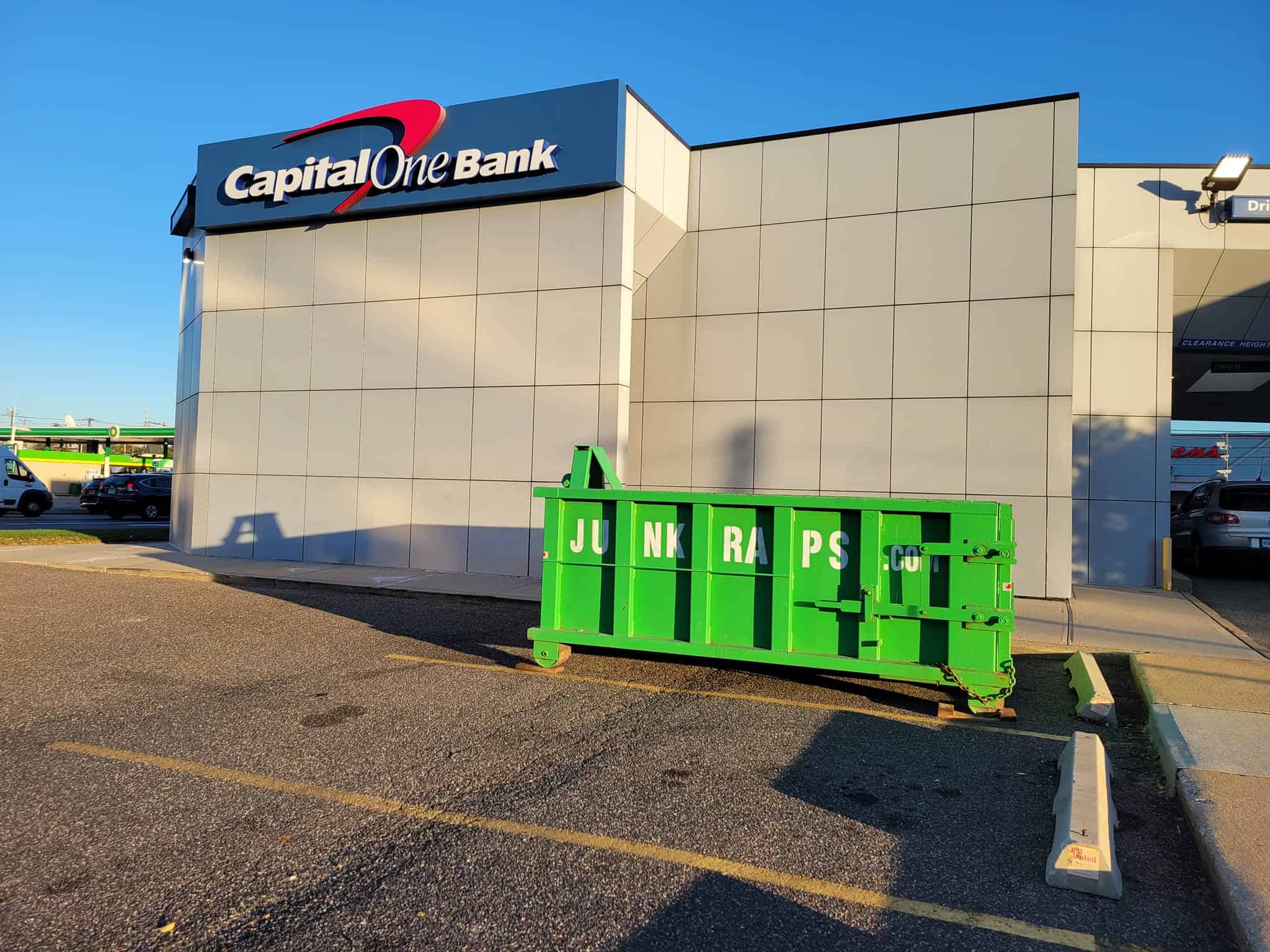
Nassau County Dumpster Rental Permit Rules
In Nassau County, the permit structure is relatively straightforward compared to some other areas. Typically, the permit requirement falls on the dumpster rental company itself, not the individual homeowner or contractor. The rental company must be registered or permitted with the specific township where they’re operating.
Most of the time, you won’t need to obtain a separate permit unless your dumpster is being placed on public property. If the container sits in your driveway or on your private property entirely, the rental company’s permit covers the placement. You’ll often see a sticker on the front of the dumpster displaying the company’s permit number.
That changes when you need street placement. If your driveway can’t accommodate the dumpster due to size constraints, steep grades, or cars that can’t be moved, you’ll need a Nassau County street occupancy permit. The application requires specific information about your project, including exact placement location, dumpster size, and rental duration.
Processing typically takes a few business days, but allow extra time during busy construction seasons when permit offices are handling higher volumes. Permit fees vary based on dumpster size and rental duration, usually ranging from $50 to $150. You may also need to provide proof of insurance and sometimes post a bond for potential street damage.
Some townships require reflective tape, warning signs, or specific placement hours to minimize traffic impact. Residential streets may have restrictions during school hours or refuse collection days. Commercial areas and business districts often have additional rules about screening requirements and pickup schedules.
For larger projects like demolitions or major renovations, you might face additional requirements such as site plan reviews or specific insurance coverage beyond standard liability. Towns like Hempstead have strict enforcement, with fines ranging from $20 to over $1,000 for unpermitted dumpsters.
The safest approach is to discuss placement with your rental company before delivery. They should know the local requirements and can often handle permit applications on your behalf. If you’re working with a contractor, they may coordinate permits as part of the overall project management. Either way, don’t assume you can skip this step—violations can force immediate removal and delay your entire project.
Suffolk County Dumpster Permit Requirements
Suffolk County operates differently than Nassau, with permit requirements varying significantly across its many townships and incorporated villages. Towns like Brookhaven, Islip, Babylon, Smithtown, Huntington, and Riverhead each have their own specific processes, fees, and regulations.
In most Suffolk County locations, the responsibility for obtaining a dumpster rental permit falls on the rental company rather than the homeowner. The company is typically required to apply for and maintain a valid town permit that covers their operations in that specific municipality. This means if you’re renting from a reputable company, they should already have the necessary permits in place.
However, there are important exceptions. Some incorporated villages within Suffolk County have unique rules that differ from the surrounding township. The Village of Brightwaters, for example, requires that only the homeowner can apply for and maintain a valid dumpster permit, not the rental company. These village-specific regulations can easily trip up even experienced contractors if they’re not familiar with the area.
Permit fees in Suffolk County typically range from $50 to $250, but here’s the important part: these fees are usually time-based and must be renewed at regular intervals. For instance, Brightwaters charges $75 for a ten-day permit. If your dumpster stays longer than ten days, you must renew the permit and pay another $75 for each additional ten-day period.
The Town of Islip doesn’t allow dumpsters to be placed in the street at all—they must be positioned entirely on private property. Meanwhile, the Town of Huntington does permit street placement but requires a permit that costs $50 and is valid for five consecutive days. These kinds of variations make local knowledge essential.
Applications typically require details about the dumpster rental company you’re using, property owner information, exact placement dates, precise location, and proof of insurance. Some towns require coordination with neighborhood associations if applicable. Processing times vary, but starting the application process early—at least a week before you need the dumpster—helps avoid delays.
Falling short of permit requirements can lead to significant consequences. If a town spots an unpermitted dumpster, they can issue a violation notice requiring immediate removal. This pushes back your project timeline, creates disposal challenges if you’ve already filled the container, and costs both time and money to resolve.
There’s also the issue of delivery timing. Many municipalities don’t allow commercial deliveries, including dumpster drop-offs, before 8:00 AM. If your crew plans to start work earlier than that, schedule your dumpster delivery for the day before to ensure it’s in place when you need it.
The best strategy is to check with your specific township before finalizing your rental. Your rental company should be able to guide you through the requirements, but ultimately, you’re responsible for ensuring compliance with local regulations. A quick call to your town’s building department or highway department can clarify what’s needed and prevent costly mistakes.
Choosing the Right Dumpster Rental Partner on Long Island
Renting a dumpster on Long Island doesn’t have to be complicated, but it does require working with a company that understands the local landscape. You need transparent pricing, proper sizing guidance, permit knowledge, and reliable service that keeps your project moving forward.
The difference between a smooth rental experience and a frustrating one often comes down to communication and expertise. Companies that provide upfront pricing, explain weight limits clearly, handle permit requirements, and deliver on time make your job easier. Those that hide fees, rush through sizing recommendations, or leave you to figure out regulations on your own create unnecessary stress.
Whether you’re a homeowner tackling a renovation, a contractor managing a construction site, or a business owner handling a cleanout, the right dumpster rental partner helps you focus on your project instead of waste management logistics. When you’re ready to move forward, we provide the transparent pricing, quick service, and local expertise that Long Island projects demand.